Asbestos and Silica: Risks Every Construction Worker Should Take Seriously
Construction work comes with risks you can see — working at heights, moving machinery and electrical hazards.
But some of the most serious hazards are much harder to see.
Asbestos and respirable crystalline silica can expose workers to extremely fine airborne fibres or dust. The health effects may not become apparent until years after exposure.
That is why understanding the risk matters.
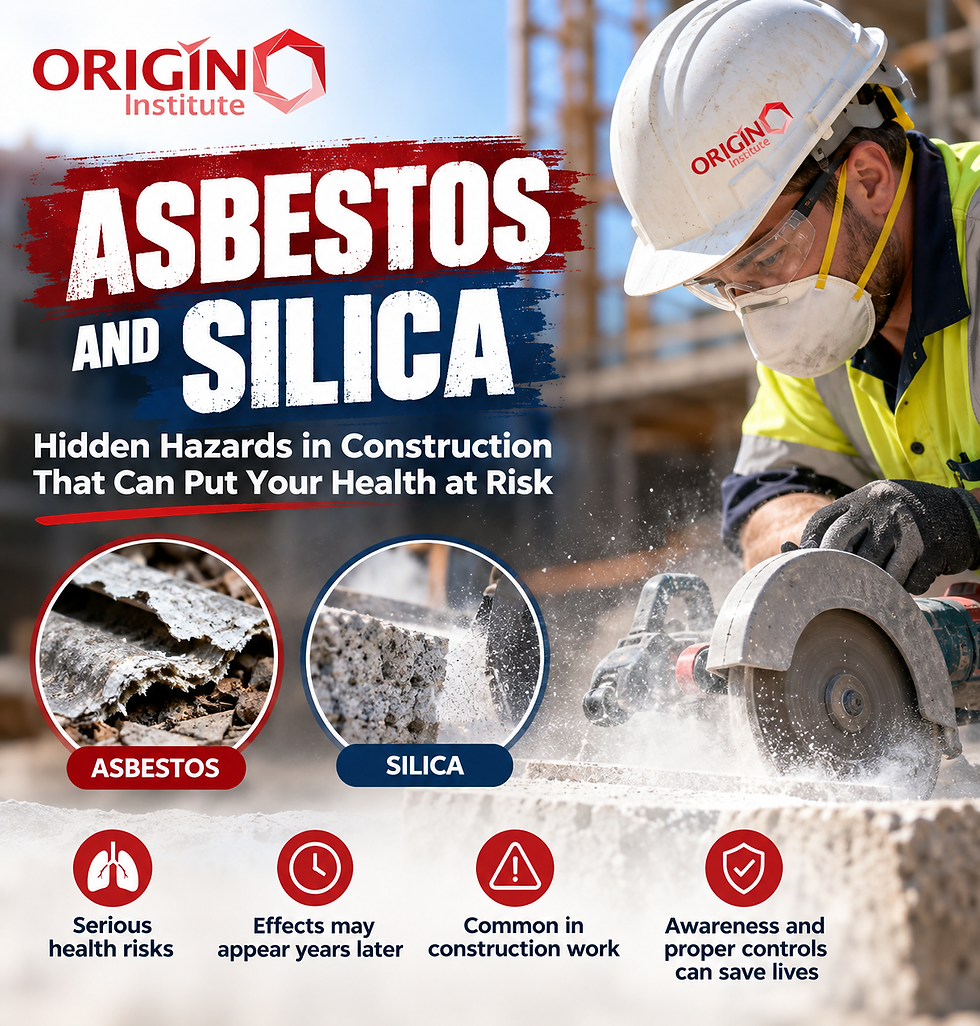
Asbestos: Don’t Disturb What You Don’t Understand
Asbestos may be present in older buildings and materials. The danger increases when asbestos-containing material is disturbed and fibres become airborne.
Workers can potentially encounter asbestos during activities such as:
Demolition and renovation
Drilling or cutting older building materials
Removing wall, ceiling or flooring materials
Working around old fibre-cement products
Maintenance and refurbishment work
Exposure to asbestos fibres can cause serious diseases, including asbestosis, lung cancer and mesothelioma.
The important lesson is simple:
If you don’t know what a material is, don’t assume it is safe to cut, drill, break or remove.
Silica: Ordinary Dust Can Be a Serious Hazard
Crystalline silica is found in many common construction materials, including concrete, bricks, mortar, tiles and stone.
High levels of respirable crystalline silica dust can be generated when these materials are:
Cut
Ground
Drilled
Chased
Crushed
Demolished
The finest particles can be small enough to reach deep into the lungs.
Long-term or high-level exposure can cause serious health problems, including silicosis and lung cancer.
“It’s Only a Quick Job” Is Not a Safety Control
One of the biggest mistakes workers can make is becoming comfortable with a familiar task.
A cut takes only a minute.
A few holes need drilling.
There isn’t much visible dust.
The job has been done many times before.
None of these automatically means the task is safe.
Risk should be assessed based on the hazard and the exposure — not simply how easy or familiar the job feels.
Know the Risk Before You Start
Before disturbing building materials, workers should understand:
What am I working with?
Could the material contain asbestos or crystalline silica?
What will my task do to it?
Will cutting, drilling, grinding or demolition release fibres or dust?
What controls are required?
Can the hazard be eliminated or exposure reduced using appropriate work methods, engineering controls, isolation and other required controls?
Do I have the right training?
Workers need to understand the hazard, the controls and the correct procedures before carrying out relevant work.
Knowledge Is Part of Workplace Safety
You don’t need to be afraid of every piece of concrete or every old building.
You do need to recognise when a hazard may exist and know what to do next.
Understanding asbestos and silica risks helps workers make better decisions before exposure occurs.
Stop. Identify the hazard. Understand the risk. Apply the right controls.
A few minutes spent thinking about the risk today can help protect your health for years to come.
Two Hours of Learning Could Make a Real Difference
Origin Institute offers an Asbestos and Silica Awareness course designed to help workers better understand these workplace hazards. With approximately 2 hours of flexible, self-paced learning, learners can build practical awareness of asbestos and silica risks, recognise situations where exposure may occur, and understand the importance of appropriate safety controls.
Two hours is a small investment of time, but the knowledge gained could help someone recognise a serious hazard before they are exposed — and could potentially help prevent serious illness or even save a life.